
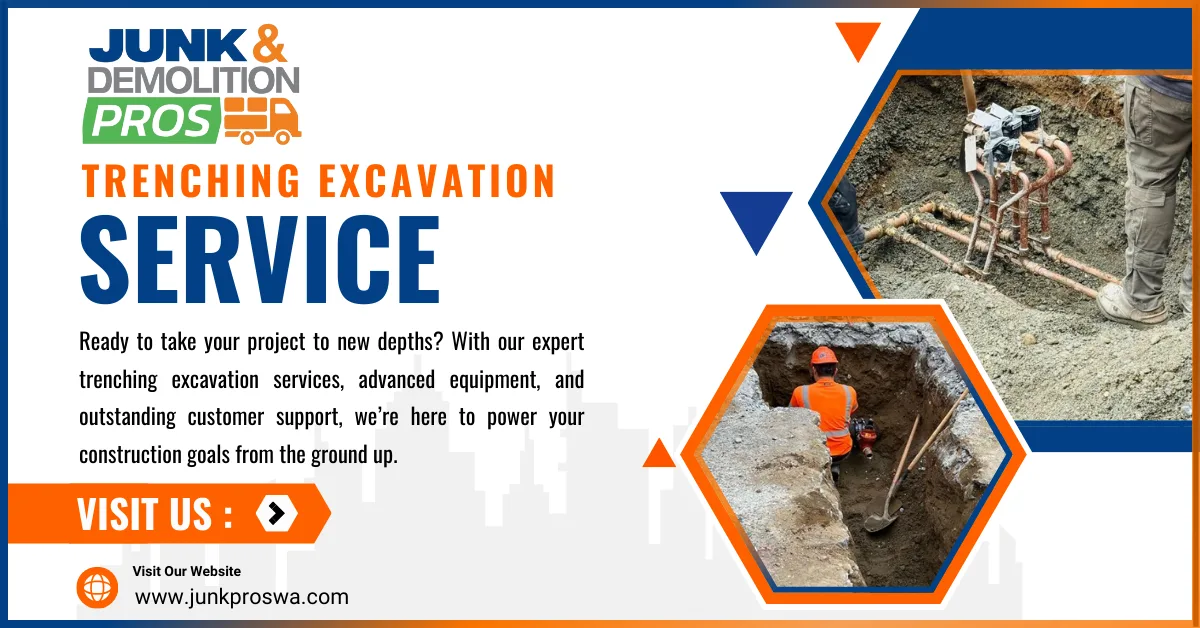
Trenching excavation is an essential method in production and civil engineering, used to dig long, slim, and shallow depressions within the ground. If you are questioning “What is trenching excavation?”, you’re within the proper region. This method is important in laying down utilities consisting of water pipes, electric cables, sewer strains, or even foundations for buildings.
In this guide, we’ll smash down the that means of trenching excavation, how it works, in which it’s used, and what makes it a crucial approach in current-day construction.
What Is Trenching Excavation?
Trenching excavation refers to the process of creating a narrow, linear trench in the ground. These trenches are typically deeper than they are wide and are often required for the installation or maintenance of underground infrastructure.
Definition:
Trenching excavations is a sort of earth excavation that involves digging a trench—typically lengthy and narrow—to install underground utilities or systems.
How Does Trenching Excavations Work?
The trenching process follows a well-defined approach that includes:
- Site Assessment and Planning
Before the excavation begins, experts conduct surveys to check soil type, water desk stages, underground utilities, and ability dangers.
- Marking and Layout
The trench layout is marked using chalk or marker lines to guide the excavation machinery.
- Excavation
Using trenching machines like trenchers, backhoes, or excavators, the trench is dug to the desired depth and width.
- Shoring and Safety Measures
To prevent cave-ins, especially in deep trenches, shoring systems or trench boxes are used for worker safety.
- Installation Work
Pipes, cables, or other infrastructure are installed in the trench.
- Backfilling
Once work is done, the trench is backfilled with soil or gravel to restore the ground surface.
Where Is Trenching Excavation Used?
Trenching excavations is widely used in:
- Utility Installation: Gas pipelines, water lines, sewer systems, and electricity cables.
- Construction Foundations: Strip footings or wall footings.
- Drainage Systems: For stormwater or wastewater management.
- Agriculture & Landscaping: Irrigation lines and drainage systems.
- Road & Highway Projects: For culverts and utility lines under roads.
Types of Trenching Excavation
Trenching excavations is categorized based on its purpose and equipment used:
Manual Trenching
Ideal for small, precise jobs or in tight areas.
Mechanical Trenching
Used for large-scale projects, employing machines like chain trenchers and wheel trenchers.
Open Trenching
Visible and accessible trench for easier work and inspection.
Closed Trenching
Used where space is limited or safety is a concern—often involves minimal surface disruption.
Trenching Safety Guidelines
Trenching can be hazardous. Here are key safety practices:
- Use trench boxes or shields for deep trenches.
- Keep heavy equipment away from trench edges.
- Test for hazardous gases.
- Provide proper exit ladders every 25 feet in deep trenches.
- Follow OSHA trenching and excavation standards.
Benefits of Trenching Excavation
Trenching is not only effective but also offers several advantages:
- Enables precise utility installation.
- Reduces surface disruption when done properly.
- Speeds up construction timelines.
- Cost-effective for large-scale infrastructure.
Challenges in Trenching Excavation
Despite its benefits, trenching also comes with some challenges:
- Soil Collapse Risk: Especially in sandy or loose soil.
- Water Accumulation: Requires dewatering techniques.
- Environmental Impact: Surface disruption and ecological disturbance.
- Permits and Regulations: Must comply with local building codes and safety norms.
Trenching vs Excavation: What’s the Difference?
While excavation refers to the overall manner of removing earth, trenching is a specific sort of excavation finished in a linear, slender shape. Think of trenching as a specialized model of excavation tailored for underground installations.
Trenching Excavation’s Equipment
Some common machines used in trenching include:
- Excavators
- Backhoes
- Chain Trenchers
- Wheel Trenchers
- Micro Trenchers (for urban or fiber optic lines)
Each machine is chosen based on soil type, trench depth, and project scale.
Conclusion: Why Trenching Excavations Matters
Now which you apprehend what trenching excavation is, you could admire its cost in contemporary infrastructure and construction. From pipelines to foundations, trenching plays a key function in constructing the sector round us—effectively and competently.
If you’re operating in production, civil engineering, or urban planning, getting to know the fundamentals of trenching excavation’s is a should for ensuring project success and lengthy-time period infrastructure balance.
FAQs: What Is Trenching Excavations?
Q1: Is trenching only used for utilities?
No, it is also used for foundations, drainage, and agricultural irrigation.
Q2: Is trenching excavations risky?
It may be, that’s why strict safety measures are enforced.
Q3: What is the everyday trench intensity?
Trenches may also range from 1 foot to over 12 toes, relying on the challenge.
Q4: What machines are used for trenching?
Trenchers, excavators, and backhoes are maximum not unusual.